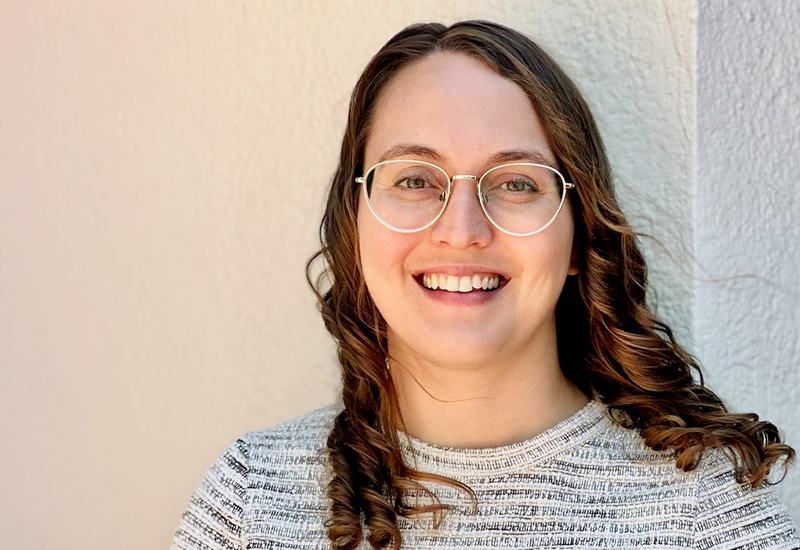
Carly Schissel joined Pennsylvania State University in August 2025 to launch an independent research program in chemistry. The path there ran from an undergraduate education at Williams College through doctoral training at MIT and a postdoctoral fellowship at the University of California, Berkeley, assembling a toolkit that spans fast-flow peptide synthesis, molecular biology, and mass-spectrometry-based library profiling. Across that path a consistent instinct emerges: when the biology calls for a method that does not yet exist, Schissel builds it.
Her doctoral research with Bradley Pentelute at MIT, supported by an NSF Graduate Research Fellowship, produced two threads that still run through her work. In the first, she co-developed a machine-learning-guided directed-evolution platform that designed unnatural peptides for intracellular oligonucleotide delivery; because the model was interpretable, she used the design rules it emphasized to make targeted mutations that improved activity, closing the loop between prediction and synthesis. That work appeared in Nature Chemistry in 2021. In the second, she invented in-cell penetration-selection mass spectrometry, or PS-MS, a technique that physically recovers only the membrane-penetrant sequences from a synthetic library for de novo identification, and used it to isolate a peptide with a hundredfold improvement in delivery over the whole-cell benchmark, published in ACS Chemical Biology in 2023. Along the way she contributed to the total synthesis of the dimeric natural product himastatin (Science, 2022) and to the development of fast-flow peptide synthesis (Science, 2020) that now anchors her own laboratory.
Postdoctoral training as a Miller Fellow with Alanna Schepartz at Berkeley, a 2021 Vincent du Vigneaud awardee, turned her attention to the peptide backbone itself. Working to introduce noncanonical backbone structures without engineering the ribosome, Schissel discovered the first intramolecular carbon–carbon bond-forming reaction within a peptide backbone, proceeding through a formal O-to-C acyl shift that operates in both synthetic and ribosomally produced substrates and generates backbone diketones that can be diversified into heterocyclic scaffolds. The work was published in the Journal of the American Chemical Society in 2025 and recognized with the UC Berkeley Postdoc Achievement Award and the ACS Women Chemists’ Committee Pfizer Emergent Leader Award.
“For decades, scientists have waxed poetic about generating programmed ribosomal products in which the amide bond is replaced by something more interesting or functional or metabolically stable. Carly discovered an unprecedented, proximity-guided rearrangement that does just that – producing ribosomal products containing a 1,3-carbonyl, the fundamental element of a polyketide.”
– Alanna Schepartz, University of California, Berkeley
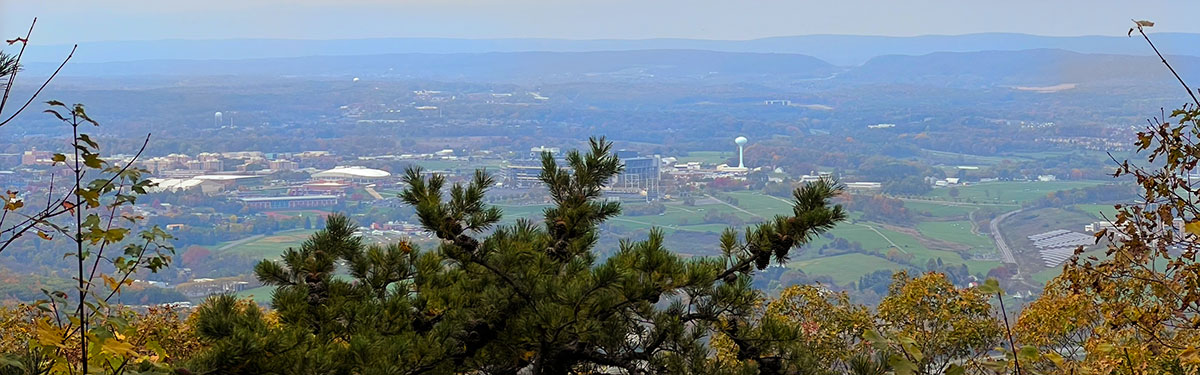
Happy Valley, PA, location of Pennsylvania State University
The Schissel Lab at Penn State now points that method-building instinct at two problems that deliberately diverge from her training. The first asks how known signaling peptides cross the blood–brain barrier, and uses what the group learns to design new bioactive molecules that can reach the brain. The second treats the human gut as a source of natural products, using those molecules as scaffolds for synthetic library profiling. The interdisciplinary environment was the primary draw to Penn State: the Huck Institutes of the Life Sciences catalyze collaboration across departments, and Schissel has embedded her group in both the One Health Microbiome Center and the University’s Neuroscience Institute. While the foundation of the program remains the ability to make challenging peptides by fast-flow solid-phase synthesis, the lab keeps dedicated space for molecular biology and protein expression, high-resolution mass spectrometry and chromatography, and mammalian cell culture. A recent team award from Scialog: Automating Chemical Laboratories will help the group advance its library-profiling technology.
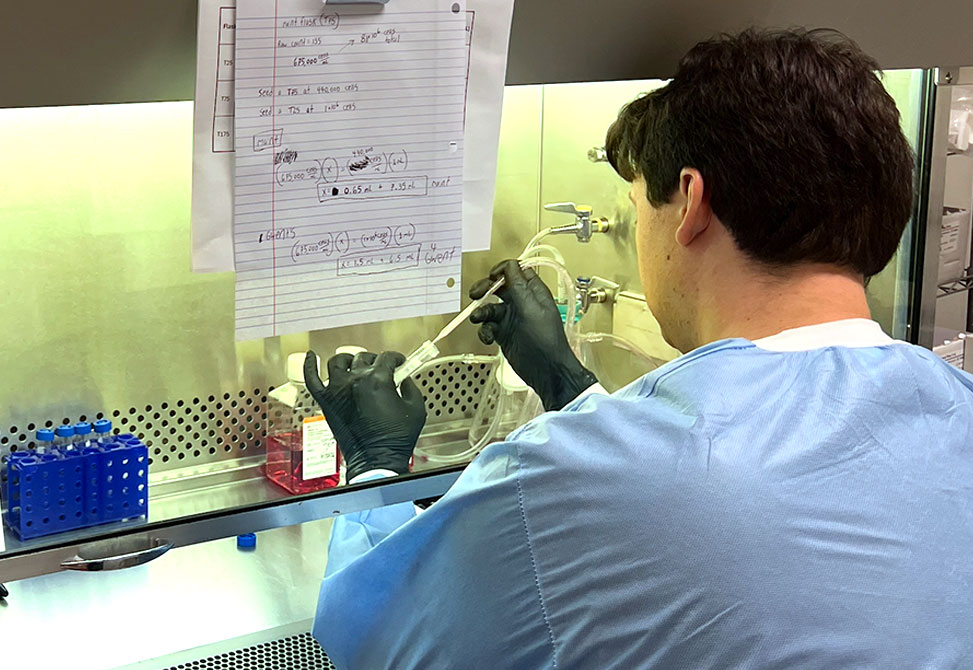
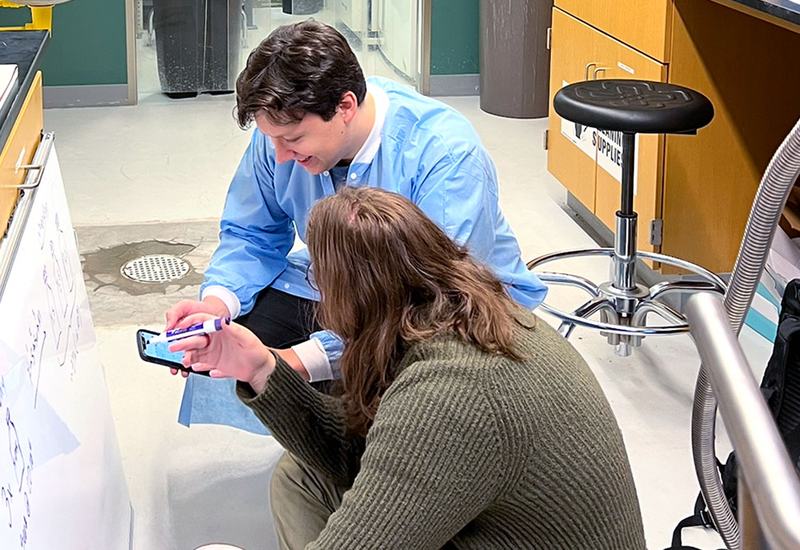
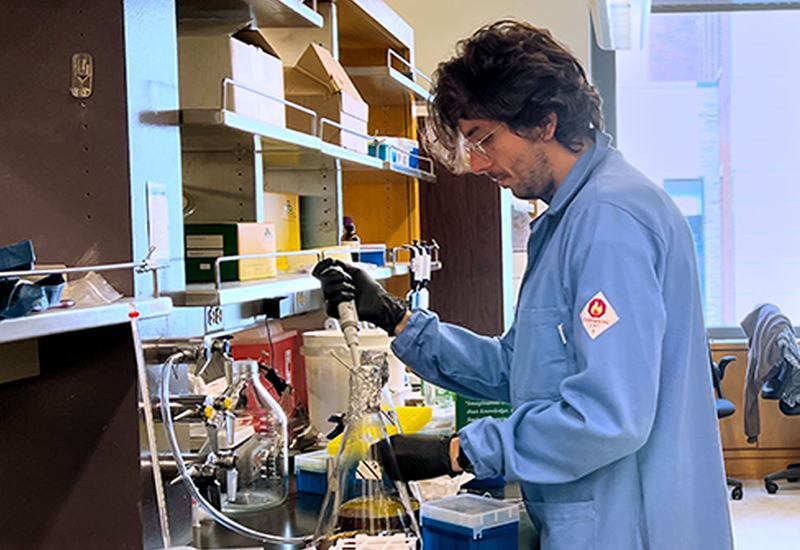
Second year Ph.D. student Julian Schwartz passaging mammalian cells in the cell culture room.
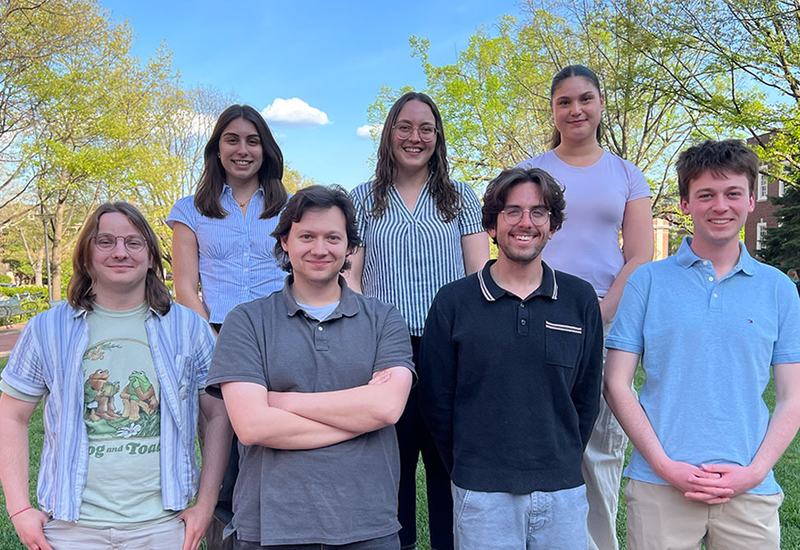
The group has come together quickly. Postdoctoral fellow Dr. Zachary Budimir joined from Betsy Parkinson’s laboratory and was recently awarded an Interdisciplinary Innovation Fellowship through the One Health Microbiome Center. The second-year Ph.D. students – Sara Blanco Gomez, Julian Schwartz, and Isaac Shellabarger – now have new first-years rotating through the lab behind them, and two undergraduates round out the group: Shane Marchok (’27), its first member, who works on peptide synthesis, and Nina Tommarello (’29), who works with Budimir. The peptide community reaches into the everyday details of the new life, too: among the players Schissel sees at Penn State’s Learn to Play ice hockey sessions is fellow APS member Scott Medina.
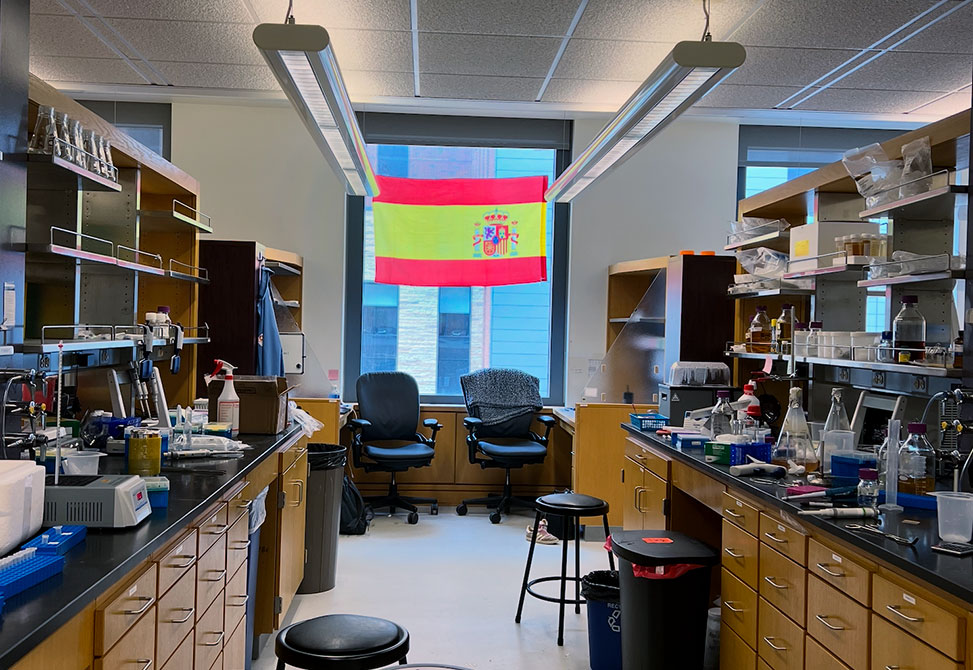
The Schissel Lab during the World Cup 2026
Schissel first joined the APS as a student, and describes the mentorship and advocacy she found there as support she had not expected. Now on the other side of that relationship, she frames the priority of these early years simply. “Recruiting and working with my team has been the most fun and rewarding aspect of this position so far,” she says. Her platforms and early publications suggest this is a lab to watch, and we look forward to hearing more from her.